
Sometimes people leave steady jobs to set up their own business, taking a risk in the hope of making their fortune. But when Debbie Ariyo left her job as a policy officer in the civil service, her only objective was to reduce children’s suffering. It’s now nearly three years since Ariyo started a career break from the Department for Trade and Industry to set up Africans Unite against Child Abuse (Afruca). And although the organisation has had a big impact both in the UK and Nigeria, Ariyo, who has now resigned from the civil service, is still unpaid.
So what propelled her to take such a step? "The first reason was that I felt something had to be done to raise awareness about the different issues confronting African children here in the UK. There was so much publicity at the time about the experiences, and deaths, of children like Damilola Taylor and Victoria Climbié, at the hands either of other young people or even adults.
"The second reason was that I was very keen to do something in Africa to help children. But living in the UK I asked myself what was the point of going all the way to Africa if we can’t do anything about what is happening here. I wanted to do it my spare time but there was a lot of demand in a short space of time."
Ariyo was born in the UK but was brought up in Nigeria, returning in 1990 as a graduate when she joined the civil service. She worked in policy in four different government departments before founding Afruca, and since then has been on the steepest of learning curves.
Fundraising has been one skill she’s had to acquire quickly. Afruca receives money from the Children’s Fund and Network Fund, and several private trusts. "It is a very demanding task. We hit the ground running because there was so much to do. I’ve had to learn very quickly about writing proposals for funding but I think we are on the right track. We have to reapply every year for small grants but now we have a track record and we’re ready to apply for larger grants. Anyone giving us money will know it will be well spent."
Afruca quickly found its advice and views were in demand with local authorities and central government. Ariyo was invited by Lord Laming to attend one of the special seminars held as part of his inquiry into Victoria Climbié’s death, but social service departments and the police were also asking for assistance with cases they were dealing with.
At Afruca’s first conference in May 2001, it became clear that the organisation would need to work on several fronts. Victoria Climbié’s case highlighted the dangers facing children being brought into the UK by "guardians". Ariyo believes that hundreds of children are being brought from Nigeria and other African countries every year, most of them sent to work as domestic servants. These children, typically aged between 11 and 15, are being brought in on false passports, or genuine passports belonging to a different child. They are not attending school and are at the mercy of their host families who use them to look after younger children while the adults study or work.
"The children most at risk are not unaccompanied children because they can be rescued at the point of entry. The children most at risk are those with an adult purporting to be a guardian, auntie or parent who can do whatever they like with that child without anybody knowing it." Because of poverty at home people are keen to give their children the chance of a better life, and believe that coming to Europe will give them that life. "If someone like me offered to help them look after their child by bringing the child to Europe, they would let the child go thinking that everything will be fine.
"There are many people who are looking after other people’s children well, but the system is open to exploitation. If you had it in mind to hurt a child this would be an easy way to do it. That is why we have been back to Nigeria to publicise what we call the "better life syndrome" - and encourage parents to be aware of the dangers."
Ariyo is pressing the government to alert local authorities to these children and the need to identify them, to monitor their welfare and check the suitability of the adults looking after them. These are privately fostered children, but they are more difficult to identify than African children living in the suburbs with white families. They are not at school, and they are living with black families in multi-racial neighbourhoods, but are just as much in need of protection.
But as well as these hidden children, newly arrived African children living with their own families in the UK also face many challenges. "Children come from an environment where there are rules and regulations, and you are expected to be respectful. They come to a new environment where there are far fewer rules and where speaking English becomes a problem all of a sudden. They are speaking English but no one can understand what they are saying, or people are actually laughing at the way they speak English.
"Many of these children feel they have had a very good upbringing in Africa, they may have been to some of the best schools out there. Now coming here for some strange reason they find themselves going to some of the poorest schools where the quality of education is extremely low.
"And yet they are still seen as outsiders, as inferior people. They can’t handle the discrimination and racism, and some children just lose it. They become angry, and reckless, take it out on other young people and get excluded from school. Or they might try to prove they belong by joining cults or gangs and getting into trouble."
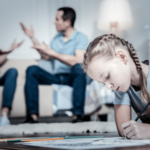
In response to this need, Afruca has piloted a series of "induction" sessions for recently arrived African children in secondary schools in Islington, north London, where the organisation is based. The sessions lasted two days, and included assertiveness training and communications skills, as well as giving the young people a chance to share their experiences and learn from each other about ways of dealing with difficult situations. "If we can let them talk about their experiences and let them know that they are not alone, they can gain strength from that," says Ariyo.
Ariyo ran the sessions herself with volunteer helpers, and in the process discovered a need for more information and support for the children’s families. "We had children saying their parents beat them a lot. Of course many recently arrived parents are also finding it difficult to cope. In Nigeria, or Ghana, or wherever they have come from, things are done very differently. They arrive here, they are having to deal with immigration issues, with housing issues, with employment issues and on top of this you have a child who is experiencing difficulties at school.
"People feel that there is no control over children in this country compared with where they come from. If they beat their children here they can be taken to court and even lose the child."
Afruca is now planning a series of induction sessions for parents, and inviting the police and social services to talk to them. "We want parents to know what the rules are - what you can do and what you can’t, and if you have a problem with your child where you can go for help."
Ariyo might not know how she’s going to pay her mortgage month my month, but she is proud of what she’s done. "It was a shock to me when we started that there was no organisation looking at the issue of abuse of African children. Now our viewpoint is respected. It means we can influence what is happening, which you need to do if you want to change things. We are here as the voice of African children."
See www.afruca.org