
After an eye-opening few days shadowing social workers (more on that soon), it's back to business as usual. Here's a quick spin around this week's social care news. Recently in autism Category
After an eye-opening few days shadowing social workers (more on that soon), it's back to business as usual. Here's a quick spin around this week's social care news. 
If you know or work with an autistic young person why not encourage them to enter the Create! Art for Autism 2012 competition, launching later today. It's open to any 11-25-year-old, from anywhere in the UK, who has been formally diagnosed with an autistic spectrum condition, including Asperger's syndrome. There are four main categories - 2D art, 3D art, digital art and poetry - and entries can be submitted from today until May 18. The finalists will be announced on June 12.
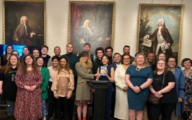
Now in its second year, the competition will kick off with a parliamentary reception tonight, followed by an awards ceremony on July 6 and a national tour of finalists' artwork across Cardiff, Bristol, Birmingham and London. The organisers, Beechwood College, hope it will demonstrate that art can greatly improve the lives of young people with autism and dispel myths that they cannot be creative. (They should have no problem achieving this if last year's entries - some of which are pictured here - are anything to go by.)
Last year's digital category was won by 18-year-old Sam Fitzgerald (top picture). His mother Lindsay said: "It is fantastic and inspirational to see that Sam's skills have been recognised and that unnecessary barriers have been removed to enable his photography to be celebrated in public for all to see and enjoy."
Morning all. Here's another quick round-up of today's news, views and interesting things, starting with good news for Essex council's children's services department which has been released from two years' of government supervision after making improvements.
The latest court statistics, published today by the Ministry of Justice, have revealed care proceedings took 55 weeks, on average, to complete between July and September 2011.
Mothers of disabled children have opened up about their experiences of family life, describing to the Daily Mail how they felt when they learnt their children would have different futures to the ones they had expected. Fiona Wilson, 41, recalls her father-in-law telling her to leave her newborn son, who has Down's Syndrome, in the hospital, warning "he'll ruin your life".
Although Wilson adores her son, who was later diagnosed with cerebral palsy and autism too, life has been far from easy. She describes the exhaustion of having to "fight for your child at every step", something parents of disabled children will undoubtedly relate to.
In more positive news for disabled children and their families, a number of charities, including Mencap and Scope, have backed Ambitious about Autism's Finished at School campaign - lobbying for a clear legal right to educational support for young disabled people aged up to 25.
Third Sector reports that a Wolverhamptom charity supporting young offenders is to close after an investigation found its activities were likely to mislead potential donors.
Another day, another Facebook scandal - this time involving a 24-year-old man who attacked a 13-year-old girl he groomed online after she logged onto the social networking site during a difficult time at school. (Changes in a child's online behaviour could indicate they are being exploited. For more details of this warning sign, and others, see our online tool.)
Picture credit: ZoeLouisePhotography
Many young people with autism face a stark choice when they leave school: stay at home with their families or go into residential care with people much older. The latest figures reveal that less than 1 in 4 continue their education beyond school and only 15% of adults with autism are employed.
This is why Ambitious about Autism has embarked on some innovative ways to give pupils at our specialist provision, TreeHouse School, the skills to develop th
eir independence and creativity. We have built a radio station (Ambition Radio), a digital arts suite, a retail outlet (Our Capital Shop) and an art studio with the help of a £98,000 grant Help a Capital Child. The grant from Capital FM's charity was the largest amount it had ever awarded and was part of a record £1,612,840 given out to projects across London in the 2010 - 2011 financial year.After months of preparation our Capital Sixth Form Learning Stations were officially opened by Margherita Taylor (pictured), Capital FM DJ and Help a Capital Child patron, this week. While in the radio station she got a blast of High School Musical's "Start of Something New". In Our Capital Shop she bought a chocolate bar from a pupil who made sure Margherita gave her the correct money. High School Musical and Kit Kats are not core parts TreeHouse School's curriculum but allowing pupils to choose a song and sell chocolate to visitors sums up how we work to support their transition into adulthood. The learning stations strengthen TreeHouse School's ongoing vocational programme, which aims to develop the skills pupils will need to live more independently and gain employment after leaving school.
Activities that promote creativity and self-expression are vital for young people with autism because they have problems communicating with others. Through the creative outlets of Ambition Radio, the art studio and digital arts suite we have found ways to make this communication fun and engaging. What young person wouldn't want to - as one pupil did - make an animation film of themselves interviewing Yoda from Star Wars?
Supporting young people with autism transition into adulthood isn't rocket science. There are increasing numbers of good practice examples of professionals working holistically with young people with autism to help them achieve. We all need to be more ambitious about autism.
Grandin said: "It has been a wonderful experience to visit Ambitious about Autism and TreeHouse School and see the work done to support children and young people with autism. It is important to identify children with autism when they are younger and get them one to one provision even earlier. I'm a strong believer in early intervention; it's good to see children and young people with autism thriving."
Grandin is a professor of animal science at Colorado State University and was named by Time magazine as one of the most 100 influential people in the world in 2010. In the same year actress Claire Danes played Dr Grandin in a biopic of the same name.
Watch Grandin's Q&A session at the school last week:
The guidance says at least 1 in 100 children under the age of three years has an autism spectrum disorder (ASD), but levels of understanding among healthcare professionals vary greatly throughout the UK.
NICE's guidance calls for healthcare professionals in the NHS to work closer together, as well as to improve how they engage with schools, social care, the voluntary sector and other key services that can offer useful insight into this condition.
Other proposals include improving diagnosis and post diagnostic-support, such as appointing a case coordinator for each young person and their family as single point of contact who will signpost them to appropriate services and creating a profile of each young person who has a diagnosis, outlining their needs.
Could autism be in danger of slipping off the agenda under plans for GP consortia? This was just one of the concerns expressed at a networking session organised by The National Autistic Society at the Lib Dem 2010 conference here in Liverpool.
One psychiatrist was worried that autism won't be a core issue for GP consortia, and that GPs are not sufficiently trained in the mental health problems which around 71% of children with autism also face.
But for many of the young people who attended the session, coming up against obstacles in services was nothing new. They were used to having to "break down doors" to get the help they needed, and were tired of finding themselves stuck in the gulf between children's and adults services.
One young man even remembered a friend who, suspecting she had autism, contacted Camhs for help. She was sent a letter two days after her 18th birthday which told her she was no longer eligible for local services. "Call me cynical," he said, "but it felt like they deliberately waited until after her birthday to send that letter."
Whether this was true or not, his perception was that a vulnerable young person had been abandoned by services. It didn't restore his faith in a system which he said had also let him down. Sadly, parents seem to share his view. Just one third (32%) of parents believe Camhs have improved their child's mental health, research by the National Autistic Society found.
So how do we need to rethink mental health services for children with autism? This was the question we all discussed in groups, while canapes and cocktails circulated.
Seventeen year old Hayley said GPs need to 'think outside the box'. "The thing about being autistic," she said, "is that you won't open up to someone unless you have a rapport with them." Health services might wrongly assume young people are coping, she said, urging GPs and mental health professionals to dig deeper when trying to engage these young people.
One step should be getting savvy with the media young people are using, she said. Hayley's mother and her three siblings, who all have autism too, communicate by text even if they're in the same room. Practitioners would have much more success if they followed suit, she said.
About the Children's Services blog
The Children’s Services blog covers the latest news, views, gossip and analysis in children’s social care. It is aimed at professionals working with these children, young people and their families. The blog is written by children's beat editor Camilla Pemberton. |
| Children's Services blog home |
| Follow the children's team on Twitter | ||
| Cookies & privacy | ||
How to get in touch
| Email: | Camilla Pemberton |
Inform
![]() |
|
Community Care Inform is a subscription-based online reference tool for social care professionals working with children, young people and their families. For more information click Here. |
More from Community Care