







Recently in national politics Category

Green Man supporting the 'Post Office Bank'

| | Comments (1)

There are two things which have led me to email my MP and ask him to support a motion (EDM 1082) which proposes the development of a Post Office Bank.  Firstly, with many 'High Street' banks having financial difficulties and some having to be bailed out by the Government, it would make sense to have a bank entirely supported by the Government, with no shareholders looking for a profit.  Secondly, Post Offices are still closing down partly as a result of decisions to increase the online or electronic transfer of pensions and other benefits.


I see Post Offices as an essential cornerstone of local communities, and their closure has meant that people who used to walk less than a mile to get to their local Post Office might now have to go by car.  Their loss isn't just the Post Office facilities, but the other things the shop sells... newspapers, sweets, basic groceries (our local one sells milk, sugar, teabags, basic stationery and birthday cards etc). The weekly trip to the Post Office, for some, used to be an important part of their social lives, as some people living alone don't have a lot of human contact and their weekly pension collection is the contact they need to feel part of society.  If a Post Office closes, other shops nearby might lose trade too, so putting them at risk.  


The House of Commons Business and Enterprise Select Committee is conducting an inquiry into the future of the Post Office, and this includes suggestions about a Post Office Bank, able to offer cheques, credit/debit cards, overdrafts and other financial services.  My MP, Hugh Bayley, suggested a number of other possible services (after consulting with sub postmasters and the City of York Council) including allowing branches to process some other financial products such as council tax and rent payments, insurance etc, and issuing things like bus passes.  Some Post Offices could have internet terminals to allow access to services currently being promoted as easily accessible on the web, like TV licences and car tax.  Many people still don't have domestic access to the 'net and access at a post office might be one way of keeping the local offices open.  Hugh Bayley also suggested a Post Office Travel Agency... something I'm less keen on, but my suggestion would be being able to link with the local Credit Union so payments could be made easily, instead of the current arangement (in York at least) of the CU having a room in the Council Treasury Building twice a week.  And, of course the main (perceived) reason that Post Office use has declined, being able to issue pensions and benefits. 


So, I look forward to hearing more about the future of the Post Office, and to knowing that their future is assured.  I will also make more use of the Write to Them website, as it enables you to contact your MP, MEP, local councillor and other representatives very easily.   I also pledge to use my local Post Office more often, to play my part in it's continued success. 


I attended a York in Transition meeting last night, the first Solar Panel Buyers Club. I was planning to extol the benefits of bulk buying this type of hot water system, but news this Monday morning from another airport protest means that some of this post will be discussing that too.

Green Man supports the 'Open Eye' Campaign

| | Comments (0)

I only learned about the new 'Early Years Foundation Stage'  a few weeks ago, catching up on a Summer Edition of Green World which had got lost in my cluttered day bag.  I was appalled to find that very young children are now, by law, being compelled to explore ICT technology and are subjects of targets and literacy goals.

Green Man welcomes a Green New Deal

| | Comments (0)

The current 'Credit Crunch' combined with high energy prices is seemingly causing a recession... a period of no economic growth or contraction.  Part of me welcomes this, despite the discomfort we will all experience (such as reduced entertainment bookings for me) as in a greener world we'd consume less, and in a recession we do just that.  One of the weird effects of this economic situation is that with reduced demand, some prices will fall... so I'm not suprised to see the fuel prices dip temporarily. 

Green Man celebrates victory at Kingsnorth

| | Comments (0)

You may remember seeing the Climate Camp in the media this year, where protestors and campaigners gathered near Kingsnorth Coal-Fired Power Station in Kent during the first week of August. One of the aims of the camp was to draw attention to the situation that faces humanity if we continue to burn coal unabated.. like E ON would like to do, by building another power station at the site to replace the old one.  The proposed new electricity generator would emit millions of tonnes of carbon dioxide into our atmosphere, with no 'carbon capture and storage' technology installed.  To many of us, behaviour like this is just criminal and exceedingly foolish.

Green Man explains Climate Camp at Kingsnorth

| | Comments (0)

This week sees a mass action at Kingsnorth coal-fired power station in Kent, where the old power station is due to be replaced by a new coal-fired power station.  There had been talk of putting experimental 'Carbon Capture and Storage' technology into this development, but not enough money has been invested to know whether it works, so it looks likely that a new dirty electricity generator may be built.

Green Man considers Peak Oil

| | Comments (0)

More often we are hearing various terms bandied around in the media and some of them are not self-explanitory... one of these is 'Peak Oil'.  So last week I attended a York Greenspeak meeting which was all about this fascinating and very current subject.  I knew a bit about the theory that oil reserves are about half finished, but less about how this will affect us economically and socially.


Peak oil was suggested by Shell geologist Dr Marion King Hubbert in 1956 as he had worked out that the discovery and extraction of oil would follow a 'bell curve' distribution.  He accurately predicted peak US oil production (1970) and that world oil production would be somewhere about now, ie that we may be about to start the long period of reduced oil extraction.  Peak world oil discovery was 1964, which means that although there is probably more oil to be discovered, it isn't the 'easy to get' stuff and it will be smaller quantities, and more expensive to get out.  Meanwhile, world oil use continues to rise, as developing countries continue to develop and human populations continue to grow.  Published world oil reserves suggest that peak oil will be about 2030, but recently Shell has drastically reduced their reserve figures, suggesting that oil companies may have overstated their reserves (to boost confidence and share prices?).


So, we are heading for a situation with less available mineral oil, and this will affect us in a number of ways.  Firstly, scarcity drives prices up.  We are already experiencing this.  When the price of a barrel of oil goes up, it becomes more economically viable to extract oil out of 'unconventional' sources such as tar sands and oil shales, but these require more energy to get the oil out, so the price won't go down again.  Higher prices also mean that investment into alternatives such as hydrogen, biofuels, coal liquifaction and nuclear will go up.  But all of these alternatives have problems and knock-on issues... biofuels for instance are competing for finite arable land for food and biodiversity, the hydrogen economy depends on either electricity to split water or fossil gas to provide the hydrogen, and coal and gas both add carbon dioxide to the overloaded atmosphere.  The two greenest solutions to the coming energy crisis are energy efficiency and renewables from wind, sun, tides and hydro.


So how do we 'ordinary people' deal with this knowledge?  Well it would be responsible and prudent to reduce our energy use, by driving less and in smaller more efficient vehicles, by reducing energy use in the home by insulating, having more efficient appliances and switching them off when not in use, by reducing meat and dairy in our diets, by buying less and recycling more, by buying locally and in season... you know the score by now!  Unfortunately, we all know what we SHOULD do but are finding it very difficult to change.

Green Man on Energy Efficient Buildings

| | Comments (1)

From October 2008 all public buildings over a certain size will be required to display an Energy Performance Certificate, which will be in the form of an A-G rating similar to a new fridge or car.  Buildings use about 50% of our energy in this country and therefore if they are made to be more efficient, we are going to get big savings of carbon emissions AND money from our fuel and energy bills.  EPCs are also part of the Home Information Pack which house sellers have to provide, but only public buildings over 1000m2 have to display the Certificate, although smaller buildings can voluntarily do so.


This regulation has been brought in because of the EC's Energy Performance Directive, responding to the needs of climate change and reducing our carbon footprint.  The assessment of your building has to be by an accredited assessor, who will look at the fabric of the building, the ventilation, lighting, heating, cooling, hot water and fuel/s used, plus any other mechanical or electrical systems, to see if they are running efficiently.  These details will be inputted into a software programme and the energy efficiency rating will be calculated.  The person in control of the building will be provided with reccommendations and advice, especially for the air conditioning and boiler systems.  Displaying the certificate shows visitors to your building how energy efficient it is, and if you have an efficient building or work towards making it more efficient, you will be showing 'corporate social responsibility' AND saving money!  You can download the pdf guide to this here, and learn more about EPCs generally here.


Ways in which you can make your building more energy efficient are many, but start with how they are used by the people within them, such as turning off monitors and printers at night, and turning off lights when the room's not being used, only heating the required amount of water in a kettle etc etc... the same type of energy-saving behaviour we should be doing at home.  At work, though, we may have motion sensors which switch lights on when we come into a room (and off when there's been no movement for a few minutes), and time switches which turn computers off after the office has shut.  These measures are good investments as we cannot rely on individuals to always do the right thing!  However the fabric of the building is very important too, external wall insulation, cavity wall insulation, internal wall insulation, roof-space insulation, double or triple glazing, draughtproofing... these all help conserve heat and reduce waste.  Replacing old lightbulbs with compact fluorescents or LEDs also reduces your bills, although like many measures may have a high initial cost which is recouped over several years.  Old, inefficient heating systems can be replaced...and these days, there are some interesting low-carbon options including heat pumps (more on these in a future blog) and biomass boilers, as well as 'traditional' gas or oil heating, but more efficient than older models.  With energy prices going relentlessly up (and there is no hope of them going down folks), these technologies are looking increasingly viable and cost effective.

Green Man on cutting costs and cutting carbon

| | Comments (0)

Last week, researchers at the US National Oceanic and Atmospheric Administration (NOAA) announced that Carbon Dioxide levels had hit a new record high, of 387 parts per million (ppm), as measured by their research outpost in Mauna Loa, Hawaii.  This may not mean a lot to people less obsessed by CO2 levels than me, but it is significant, since the NOAA people say that the rate of accumulation is increasing, and is over 2ppm greater each year.  This is the highest CO2 concentration for 650,000 years, a level that humans have never experienced before.  This means that in just 6 or 7 years, the level will rise to 400ppm, a theoretical 'line in the sand' over which many scientists think that our climate will descend into chaos and become much more unpredictable and violent.


Green Man reports on Westminster visit

| | Comments (1)

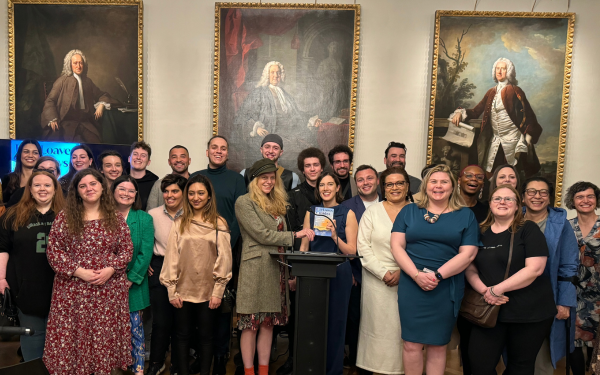
Regular readers will know that I won a competition by Oxfam to find three supporters who had a small carbon footprint.. the prize being a trip to Westminster (John's Weird World 9/3/08). I have now had time to digest my visit and wonder if it would have had any positive outcome.