

Recently in media Category

POC.jpgOn Sunday night we'll find out if the BBC's Protecting our Children social work documentary has won a BAFTA. Good luck to all the social workers involved, we'll have our fingers crossed for you here at team ComCare.

The social work documentary is up against some tough competition in the best factual series category, including Gareth Malone's The Choir: Military Wives and Our War. We hope Protecting our Children gets the recognition it deserves for offering an all too rare insight into the complex realities of child protection.

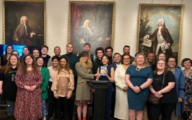
At a reception at Community Care Live last week Annie Hudson, Bristol city council's director of children and youth services, explained why she made the brave call to put her social workers in front of the cameras.

Annie said that the experience of making the series taught her that frontline social workers are often the best spokespeople for the profession. Check out clips from her speech below.


Following Annie's speech Owen Davies, policy and public affairs advisor at The College of Social Work, gave us his take on the programme. Here's what he had to say:


Check out all our coverage on Protecting our Children, including news, views and live debates here. 
handscomputer.jpg
What should a social worker do when a parent voices concerns that photos posted on their daughter's social networking page could highlight a potential child protection issue? 

Our next online practice dilemmas debate, between 7-8pm on Monday May 14, will focus on the challenges posed by social media use and the tough judgement calls this presents for children's social workers. The case study is below. How would you handle it? 

To sign up and join our panel of frontline experts to debate the issue, just register in the Cover It Live panel below. You'll receive an email alert to let you know when the discussion will be starting. In the meantime you can post your initial thoughts on the case on our forum CareSpace or tweet us @communitycare (our hashtag for the debate is #swdilemmas). (Pic: striatic)
 

Case study: Is this an online child protection case?

June* is a single mother with two children. Joe* is a 4 year-old boy with physical disabilities and Kim*, a 13-year old girl. June has been managing fairly well until recently, but seems distracted when the social worker visits for a review meeting about Joe. Things seem fine with Joe, but following the meeting June takes the social worker to one side. Initially she says she is hesitant about disclosing her concerns to a social worker, but has been finding it very difficult dealing with Kim. 

June then logs onto a social networking website using her own details and then views her daughter's online social networking profile. In Kim's photo gallery, there are several photographs of Kim naked. These photos are accessible to anyone visiting this profile. In some of the photos she has a female friend, approximately the same age, who is also naked. June says she doesn't recognise the other girl. 

The photos appear to be self-taken images. June does not know how to broach the subject with her daughter as she says has become increasingly distant in recent months. June has spoken to a friend about her concerns. Her friend tried to reassure her by saying it is just a phase of sexual exploration. But June is worried, particularly as anyone who logs on to the website can view the photos. (*names changed)

Our panel debating the issues on the night

Kelly Alleyne - Kelly is child protection co-ordinator at the Child Exploitation and Online Protection Centre.

Lucie Heyes - Lucy is the Social Work Reform Programme manager at Islington Council and a member of the College of Social Work.

Nushra Mansuri - Nushra is a professional officer at the British Association of Social Workers.

Joanna NicolasJoanna Nicolas is an independent social worker, child protection consultant and trainer.

BBC Protecting Our Children nominated for a BAFTA

user-pic
| 1 Comment
POC.jpgIt's not easy to be nominated for a BAFTA, but, the annual list of nominees is out and, sandwiched among some very impressive films, is a well-deserved nomination for the BBC's social work series - Protecting Our Children

Does this mean the television industry has recognised the value of social work? Perhaps, but I think it already had (TV researchers have always been interested in social work). Either way, it doesn't really matter. What does is that this well-made prime-time series has arguably done more to boost social work's public profile than anything else in recent years and proved the media can present social work in a sensitive, non-prurient way.

Of course it all depended on meticulous planning and the buy-in of Bristol's social workers who bravely agreed to expose their practice to the scrutiny of reviewers, bloggers, armchair critics and trolls - not to mention colleagues and policy makers.

It's up against some heavyweights in the best factual series category - Educating Essex, the ubiquitous, but brilliant, Gareth Malone's The Choir: Military Wives and Our War - but let's hope the BBC team, led by series producer Sacha Mirzoeff, clean up on the night (Sunday May 27). And for everything you need to know about the series, here's our special report.

I've also just had a longer look through the nominees and am pleased to see more social care-based films in the line-up: The Truth About Adoption; Undercover Care: The Abuse Exposed; Appropriate Adult and Terry Pratchett: Choosing to Die.

BBC doc explores Great Ormond Street failings

user-pic
| No Comments
baby p.jpg
When news emerged of unsafe practices at the Great Ormond Street-run hospital where Baby Peter was seen just two days before his death, many were shocked. 

After all, this wasn't a troubled local authority already synonymous with a high profile child tragedy, but Great Ormond Street, a world-famous hospital with celebrity supporters and a reputation for excellence in child care.

The doctor who blew the whistle, Kim Holt, always maintained she and three other doctors had repeatedly warned managers at St Anne's Hospital in Haringey - run by Great Ormond Street - that poor record keeping and staff shortages would lead to a tragedy. Great Ormond Street bosses also faced accusations of a cynical cover-up.

Was/is Great Ormond Street just "too important to be seen to fail", as suggested by an editorial in the medical journal The Lancet? That appears to be the angle a new BBC report will explore on Wednesday, as well as - so I understand - the treatment of Dr Kim Holt. It's only showing in the London region unfortunately but it should be on iplayer and we'll do a summary.

Here's the blurb: It's the nation's most cherished and respected children's hospital, but senior consultants are now claiming that all is not well at Great Ormond Street. Through a series of exclusive interviews, Freedom of Information requests and a surprising paper trail, BBC London's Political Editor Tim Donovan asks: just how far will this world-famous hospital go to protect its unblemished reputation?

Great Ormond Street Hospital, BBC London, Wednesday April 18, 7:30pm

You might also be interested in this useful CC Inform guide: Line manager briefing on whistleblowing

At last, a believable story on Desperate Housewives

user-pic
| No Comments

Eva2.jpgIt seems there's more to channel 4's hit US drama series (actually it's now E4 - the television equivalent of a demotion) than ridiculously-over-the-top murder plots and in-fighting between cast members.

It can still, as good television should, make us pause to think.

In Sunday's episode, a child abuse storyline (starring Eva Longoria, pictured) may well have resonated with viewers, maybe viewers who've been abused and are too confused or afraid to confront the experience.

According to this interesting blog, 'Desperate Housewives, Gabrielle, and Me', the storyline was meaningful and believable, reflecting victims' shame and explaining some of the reasons why sexual abuse can be so difficult to identify and evidence.

Here's a little extract: "It seems much easier to pretend it isn't happening, and it's no wonder more than 1 in 3 children don't report it. I was abused for 4 years but know that my family weren't negligent in not realising what was happening. How could they know? I worked so hard to hide it." (Picture credit: Rex features)

Why does Nick Clegg look sad?

user-pic
| No Comments

Nick Clegg2.jpgWell, there are many possible reasons aren't there...

What with the health bill defeat, the climb down on child benefit, the broken promises on child detention and the tedium of having to pretend one's fine (just fine!) about leading the minority party in a coalition, things can't have been too easy for the deputy PM of late. (Just look at those sad sad eyes to your left.)

And it hasn't gone unnoticed as the people behind the brilliant 'Nick Clegg looking sad' site have turned the abundance of gloomy-looking Clegg photos into an internet phenomenon. But as amusing as it is to see photos of politicans looking miserable, the real joy is in the captions. Each is - as the guardian recently pointed out, listing the blog in its top 10 tumblrs - a mini masterclass in observational comedy. 

Nick Clegg.jpgLike: "Nick Clegg lost his phone, so he rang it from another phone so he could hear where it was, and when he found it he got excited because he had one missed call, but the missed call was just the one from himself."

And: "Nick Clegg sharpened his pencil until it was really sharp, but then he sharpened it too much and the end broke off and he had to start all over again."

As you'll see, it's quality time wasting.

Picture credit: Nick-Clegg on flickr and 38 Degrees

Films to 'demystify' child protection conferences

user-pic
| No Comments

videocamerabyandyrobertsphotos.jpgI've just been watching a couple of films produced by the Family Rights Group, designed to help social workers show families what to expect from a child protection conference.

The production values are pretty high and the films feature both actors and real-life social workers. They re-construct a child protection conference to "demystify" the process and its possible outcomes for families, who will of course often be pretty bewildered and frightened.

The charity's chief exec Cathy Ashley said film is the best way to communicate with families: "Explaining the process visually will improve families' ability to participate effectively in a child protection conference and give them greater ownership of the child protection plan."

One of the social workers who appears in the two films, Yvonne Josiah, deputy manager for looked-after children and leaving care teams at Westminster, hopes the films will "help tackle stereotypical views of what social services is about and show how a conference can bring together a protective plan to support families".

Let us know what you think. Here's the first film. You can view the second here.

Picture credit: Andy Roberts photos on Flickr

Sharon Shoesmith: Protecting Our Children should spark end of social work blame culture

user-pic
| No Comments

SharonShoesmithRex.jpgSharon Shoesmith, the former Haringey children's services director who last year won a case for unfair dismissal following her sacking in the wake of the Baby P case, hopes the recent BBC documentary series can begin to challenge the 'institutionalised' blaming of social workers.

Bristol council should be commended for taking part in the television series Protecting Our Children, shown recently on BBC2. It took great courage.

Social workers will have a range of views, of course, but I would urge them to concentrate on the important start the series has made in raising public awareness about child protection. My only criticism is that the three films gave no sense of the sheer volume of work that social workers deal with on a daily basis, or how many children in Bristol are subject to child protection plans.

The fact that we are now at a 20-year peak of 42,700 children considered to be 'at risk' in England - a figure that would shock many people - was not conveyed by the films. Equally, the fact that one child dies at the hands of a parent or a known adult every week in England also remains generally unknown by the public.

Between the deaths of Victoria Climbié in 2000 and Peter Connelly in 2007, over 400 children died in England and Wales at the hands of a parent or known adult. These are deaths that the public, including politicians, have no knowledge of. And these figures would double, and almost treble, to two or three a week if child deaths where neglect was a factor were included.

The unspoken taboo

Child homicide receives little attention or public debate because the scale of the deaths is largely unreported. In many cases social workers are not even aware of the incidents. It is the unspoken taboo.

The sad truth is that the killing of Peter Connelly was not an isolated case, but an all too regular occurrence. Yet it would appear wider society simply cannot face the unpalatable truth that some parents will kill their own children. Instead, the immediate reaction is that social workers have not done enough and someone must be sacked.

The public demand that all children deemed to be 'at risk' must be saved, but unfortunately that is not always possible. As a result, social workers are carrying too high a burden on behalf of society. In some cases, they are left to struggle alone with the reality of being cast as responsible for the brutal murder of a child.

Harrowing play

Last week in London's Soho I saw 'Shallow Slumber', a play by social worker Chris Lee. I urge everyone to try to get it staged where they can get to see it.

The mother in the play gives a powerful account of 'the logic' behind how she came to kill her child. It is utterly harrowing. During a discussion after the play, its producer said the scenes may be too disturbing for non-specialist audiences. No one, it seems, would want to see it.

So is it only for social workers to know, and 'own', child homicide so everyone else can stay blissfully unaware?

London's Southbank is soon to stage a play based on Veronique Olmi's novel, 'Beside the Sea', about a mother who kills her children. The book was a success in Europe when it was published in 2001, but it has only recently found a publisher in Britain. Again, this suggests the British public is apparently unwilling or unable to face these issues. This must change.

Institutionalised blame

The protection of children is one of society's most important duties, but society as a whole must act in concert and not just assume child protection is a job for social workers alone. We are all child guardians but the public need to be educated about the scale of the problem.

Blaming social workers, in my view, has become institutionalised: embedded in government policy and in the actions of local authorities and social work organisations. And, ironically, blame has also been absorbed by social workers themselves.

Social workers live in fear that 'it' might happen to them, hence the large numbers of children being brought into care - the highest number in the country's history and possibly one of the highest proportions in Western Europe.

For me, that means children's social care is not only out of control, but driven by blame and fear. It should be based on an explicit social care policy, with an appropriate set of checks and balances, and with an unequivocal understanding that there is no entirely foolproof system to protect all children from maltreatment inside their own homes.

Changing the culture from within

I believe it is only social workers themselves who can change the blame culture they are struggling to work within and rebuild their confidence as professionals.

I came from outside the profession and perhaps that's why I was able to see the blame culture for what it was, and resist it. I did not sack social workers in the case of Peter Connelly. My impression has always been that it was Ed Balls, then Secretary of State, who ordered it.

In the last few years, I have been profoundly struck by the absence of a strong national voice for social workers, indeed an advocate for social workers. There's been many a 'new dawn' in children's social care but is there a moment now for the courage of Bristol social workers, and of Chris Lee, to inspire social workers to draw a line in the blame culture?

It is they who must challenge it. And it is for their professional organisations to get behind them - to get out there with a loud, independent and distinctive voice - to show some courage on behalf of social workers. Only then can child homicide get the serious attention it deserves, which may save more children.

My best wishes to all in very difficult times, and my congratulations to social workers in Bristol and Chris Lee.

(Pic: Gavin Rodgers/Rex Features)

Protecting Our Children: The spearhead of a new movement?

user-pic
| 1 Comment

Yvalia Febrer.jpgYvalia Febrer, a senior practitioner in Richmond's children and families team, describes the reactions of her colleagues and friends to the BBC's Protecting Our Children and explains why the high-profile series should leave a lasting legacy for social workers.

After initial anxiety before Protecting Our Children was aired (how would it be received by the public - and by social workers?), I was thrilled to see that it showed such a true picture of child protection. And that so many people tuned in to watch it.

Even before the first episode there was buzz in my office about it; already people were debating whether or not it was a good idea to let the cameras in, especially after what happened in Surrey.

And in a climate where we feel hated by the nation, particularly after Baby P, why would we be welcoming any media attention?

But despite all that, the general feeling once the first episode was over, was good. Better than good in fact. People in my office were relieved viewers were seeing what we actually go through, what we really have to deal with and how powerless we are sometimes.

They felt vindicated and empowered, even if they had issues with some of it - like how realistic it is that team managers come out on visits or security guards follow us around.

Judging by my friends' reaction, they had absolutely no idea what the job was like.

Four family members called me after the first episode to say they hadn't realised how bad it was. I was offered everything from commiseration and admiration, to sympathy and career advice (possibly something safer and better paid?)

People were shocked at some of the 'characters' we have to deal with and baffled when I tried to explain we have to work together with parents, empathise with them and advocate for them.

I think the more complex aspects of protecting children, while also working in partnership with parents, are still lost on the public however. I would welcome another documentary series to delve deeper into the challenges of our job.
 
Overall though, the series gave a good idea of a social worker's day-to-day life and that's something that should have a lasting impact on the nation's view of us.
 
The litmus test, of course, will be when the next tragedy hits the papers. I don't think we've shaken our negative image yet, but we're certainly starting to promote ourselves better, and this series felt like the spearhead of that movement.

Like everything in social work, 'it's a journey'. If nothing else, we as social workers feel more empowered to stand up for ourselves and our profession; for all the good work that's done, all the successes and all the children we help every working day.

Protecting Our Chidren episode 3: Lessons for social work

user-pic
| No Comments

DrLucyRai.jpegby Dr Lucy Rai, senior social work lecturer at the Open University

The final episode of the BBC series Protecting Our Children, I want my baby back, showed three families facing the possibility of separation from their children for very different reasons.

A race against time

In the first case, we saw mum Louise trying to overcome a drug addiction so she could resume care of her baby, Mercedes.

Underlying the work with Louise was the ticking clock of her baby's developmental needs, set against her own timetable of addiction recovery. The priority was to provide Mercedes with a permanent, stable parent figure before she reached an age where changes in carers could forever harm her ability to form secure attachments.

Sadly this left Louise with very little time to achieve some momentous tasks: beating her drug addiction, withdrawing from methadone and completing a residential detox programme. Like Tiffany, the mother in episode one, Louise demonstrated real love for her baby by recognising that she was unable to meet her baby's needs in the time available.

More harsh decisions?

In the second case, we followed a mother who was failing to protect her baby from a known paedophile who shared the care of the child.

Despite clear evidence of the risk to the baby, there was a total lack of cooperation from the mother. Although there was no medical evidence of sexual abuse, the child showed worrying behaviour - such as obvious distress when having his nappy changed and being overly familiar with strangers - which indicated sexual abuse.

We saw the baby being removed by a social worker, with support from the police. This may have seemed dreadfully harsh but it is very unusual, as the team manager explained. Sexual abuse is a difficult area to respond to, and with less clear evidence of immediate risk it is normal to proceed slowly.

Multi-agency support at a time of crisis

The third case followed a mother who needed support to provide a safe, sanitary home so she and her seven-year-old daughter could be reunited.

We saw the intensive resources that can be arranged to help a parent in crisis. We saw social services, housing and environmental health workers working collaboratively to empower the mother to regain control of her home and realise her parenting capabilities.

The level of risk was very different in this case, because the child was older and the mother had been a good parent but was struggling during a personal crisis.

Child development

All three cases showed that social workers need to have a sophisticated understanding of child development. Mercedes needed quick decisions to meet her need for a secure home before she was a year old. The daughter in the 'dirty house' had both physical and emotional needs for a safe and clean home. The risk to the baby boy was heightened by observations about his behaviour - concerning behaviour in such a young child suggested his attachments were not secure and there may have been multiple, inconsistent carers in his life.

Child development plays a significant part in the education of social workers, and this programme exemplified well why this continues to be so important.

About the Children's Services blog


The Children’s Services blog covers the latest news, views, gossip and analysis in children’s social care. It is aimed at professionals working with these children, young people and their families.

The blog is written by children's beat editor Camilla Pemberton.

  Children's Services blog home
     
  Follow the Children's team on Twitter Follow the children's team on Twitter
   
  Cookies & privacy
   

How to get in touch

     
  Email: Camilla Pemberton


Inform


Community Care Inform is a subscription-based online reference tool for social care professionals working with children, young people and their families.

For more information click Here.


More from Community Care


Keep up to date

  Enter your email address, in the box below, to subscribe to this blog and receive notifications of new posts by email.

Powered by MT-Notifier

  Subscribe to this blogs feed 

Subscribe to our blog RSS feed